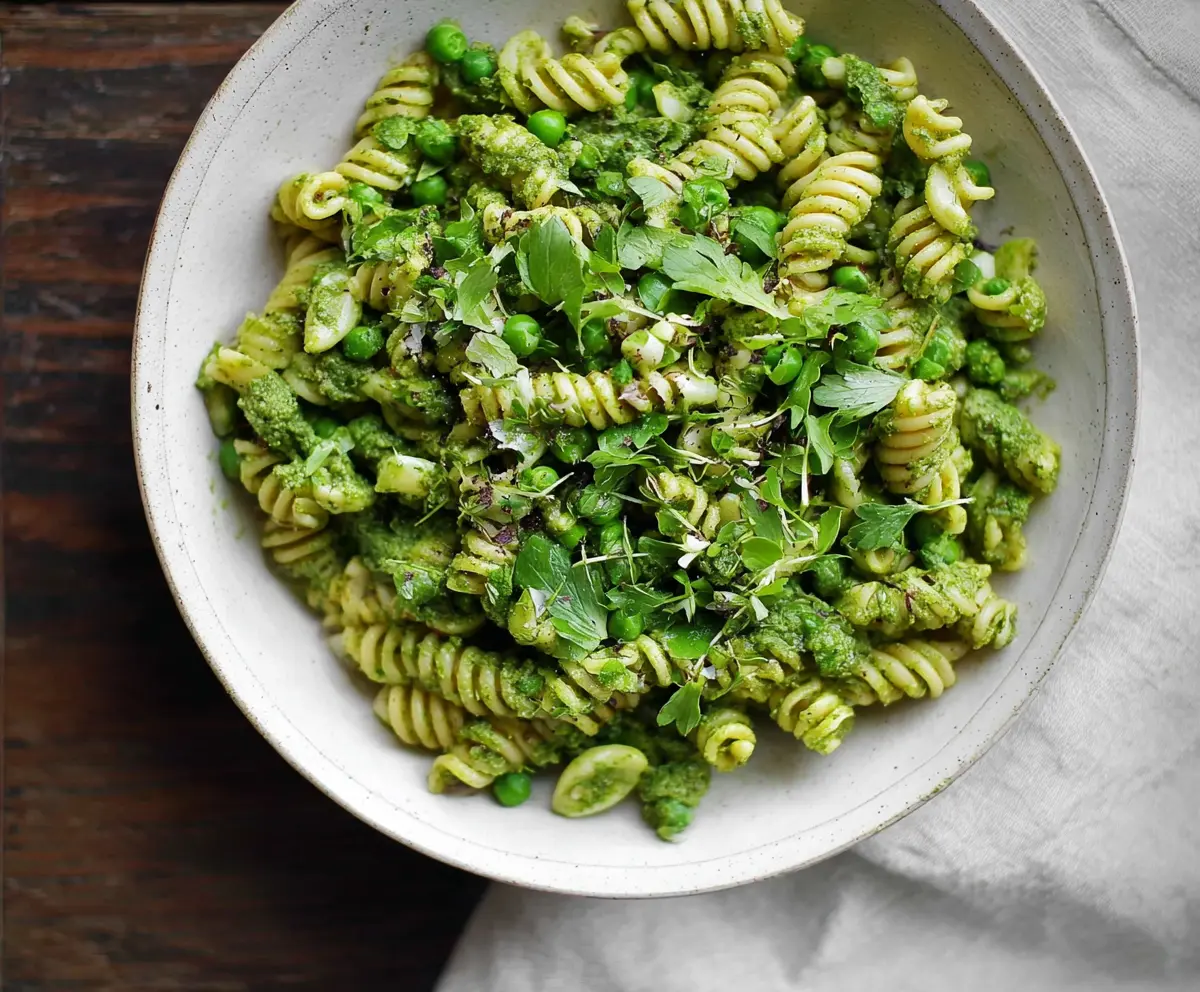
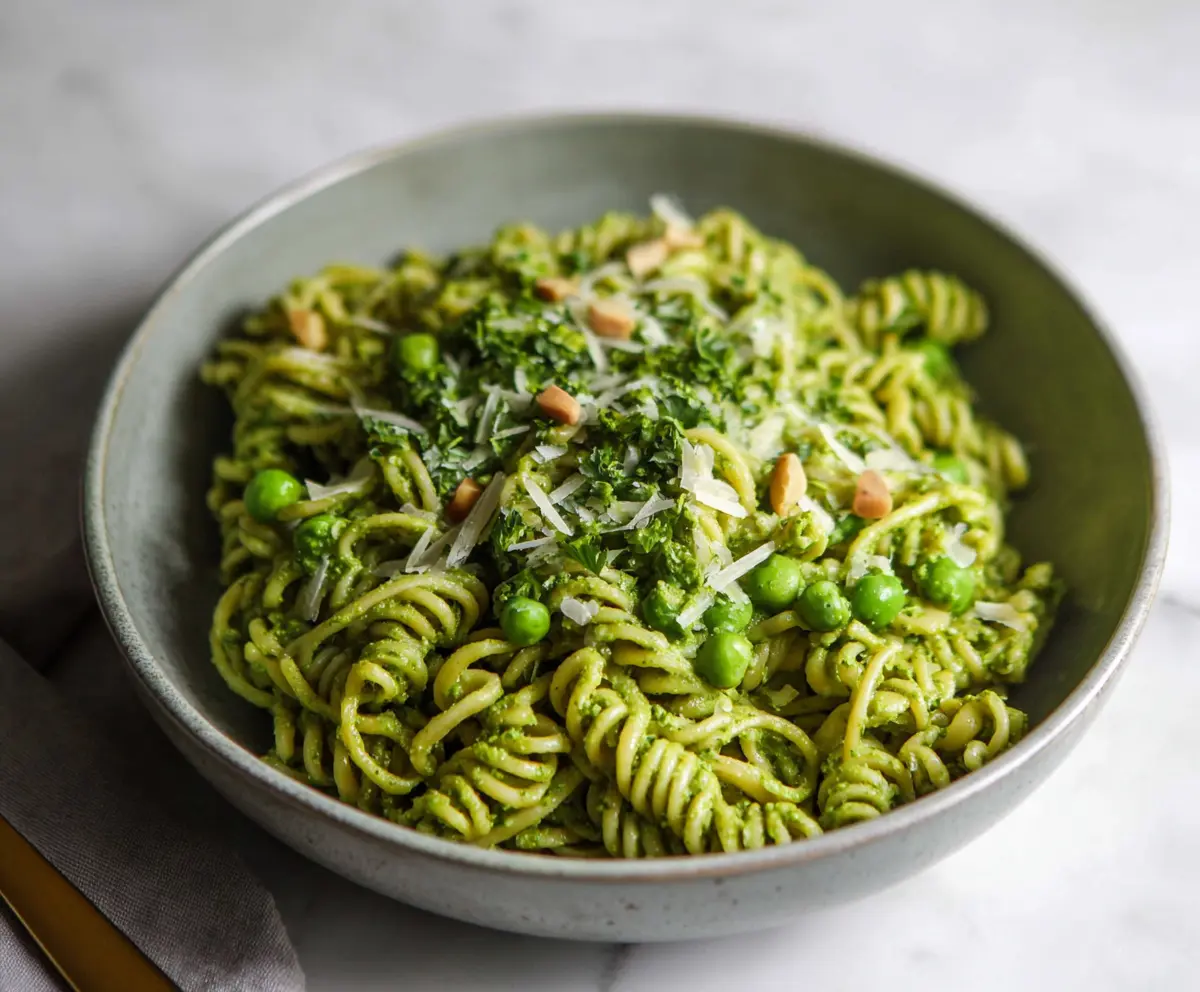
Spring Pea Pesto Pasta is a bright and fresh dish that celebrates the flavors of spring. It features sweet green peas blended into a creamy pesto sauce, tossed with your favorite pasta for a light and satisfying meal. The vibrant green color alone makes this dish feel like a celebration of the season.
I love making this pasta when peas are coming into season because it’s such a simple way to enjoy their natural sweetness. The pesto is super easy to whip up—just peas, fresh basil, garlic, and a bit of Parmesan—and it feels so much lighter than traditional pesto. It’s perfect for a quick lunch or a laid-back dinner that still feels special.
My favorite way to serve this pasta is with a sprinkle of extra cheese and a squeeze of lemon juice on top. It really brightens everything up and adds a little zing. This recipe always reminds me of sunny afternoons and fresh air, and it’s one that family and friends keep asking me to make again. If you’re looking for a spring meal that’s fresh, tasty, and simple, this is it!
Key Ingredients & Substitutions
Green Peas: Fresh peas add sweetness and a bright green color. Frozen peas work well, too—just thaw them first. They’re a great way to get that fresh spring flavor even if you can’t find fresh peas.
Basil & Parsley: These herbs give the pesto its fresh, herby taste. If you don’t have fresh parsley, try substituting with spinach or arugula for a different twist.
Pine Nuts/Walnuts: Pine nuts are classic in pesto, but walnuts are a great, cheaper alternative. You could also use almonds or cashews if you like a different nutty flavor.
Parmesan Cheese: Parmesan boosts the savory notes and creaminess. For a dairy-free option, try nutritional yeast to keep that cheesy flavor without the dairy.
Olive Oil: Extra-virgin olive oil brings richness and smoothness to the pesto. If you want a milder taste, use light olive oil or avocado oil instead.
How Do I Make a Smooth, Flavorful Pea Pesto Without It Being Too Thick or Grainy?
Getting the perfect pesto texture is easy when you pay attention to the blending and liquid balance. Here are some tips:
- Use a food processor or blender and pulse a few times first to chop ingredients before fully blending.
- Slowly drizzle in the olive oil while blending to help emulsify the pesto and make it creamy.
- If the pesto feels too thick, add a little reserved pasta water a tablespoon at a time. The starchy water loosens the pesto and helps it stick smoothly to the pasta.
- Don’t over-blend. Stop once you have a creamy consistency with some texture left to enjoy the fresh bits of pea and nuts.
Following these steps lets you control the texture and flavor, giving you vibrant, creamy pea pesto every time!
Equipment You’ll Need
- Large pot – I use it to boil the pasta easily and cook enough for everyone.
- Colander – for draining the pasta and blanching the peas; it makes rinsing quick and simple.
- Food processor or blender – this is key to blending the peas, herbs, nuts, and cheese into a smooth pesto.
- Measuring cups and spoons – help keep everything precise and balanced for the best flavor.
- Small bowl or cup – to reserve some pasta water, which helps loosen the pesto if needed.
Flavor Variations & Add-Ins
- Try adding cooked shrimp or sliced grilled chicken for extra protein—perfect for a heartier meal.
- Mix in some toasted walnuts or pecans instead of pine nuts for a different nutty flavor.
- Incorporate a handful of arugula or spinach into the pesto for more greens and a slightly spicy twist.
- Add a splash of chili oil or red pepper flakes for a little heat, if you like spicy dishes.
Spring Pea Pesto Pasta
Ingredients You’ll Need:
Pasta:
- 12 ounces rotini or fusilli pasta
Pesto:
- 1 1/2 cups fresh or frozen green peas (if frozen, thawed)
- 1 cup fresh basil leaves
- 1/4 cup fresh parsley leaves, plus extra for garnish
- 1 garlic clove
- 1/4 cup pine nuts or walnuts
- 1/2 cup grated Parmesan cheese
- 1/3 cup extra-virgin olive oil
- Juice of 1/2 lemon
- Salt and freshly ground black pepper, to taste
- Optional: microgreens or additional fresh herbs for garnish
How Much Time Will You Need?
This recipe takes about 25 minutes in total: about 10 minutes to prep and blanch the peas and cook the pasta at the same time, and around 10-15 minutes to blend the pesto and toss everything together. It’s a quick, fresh pasta that’s perfect for a weekday dinner.
Step-by-Step Instructions:
1. Cook the Pasta:
Bring a large pot of salted water to a boil. Add the pasta and cook until al dente, following the package instructions. Before draining, scoop out and save about half a cup of the pasta cooking water. Drain the pasta and set it aside.
2. Blanch the Peas:
In the boiling water used for the pasta, add the peas and cook for 1-2 minutes until they turn bright green and are tender. Drain the peas quickly and plunge them into a bowl of ice water to stop them from cooking further and keep their vibrant color. Drain again after a minute.
3. Make the Pea Pesto:
In a food processor, combine the blanched peas, basil, parsley, garlic, pine nuts (or walnuts), and Parmesan cheese. Pulse several times to roughly chop and mix the ingredients. With the processor running, gradually drizzle in the olive oil until the pesto becomes creamy and well-blended. Add lemon juice for brightness, then season with salt and pepper to taste. If the pesto feels too thick, stir in a bit of the reserved pasta water until it loosens up.
4. Toss Pasta with Pesto and Serve:
Transfer the hot pasta to a large bowl and pour the pea pesto over it. Toss everything together until the pasta is evenly coated with the sauce, adding more reserved pasta water if needed for a smooth texture. Garnish generously with extra parsley leaves, microgreens, or fresh herbs if you like. Serve immediately, offering extra Parmesan on the side for sprinkling.
Can I Use Frozen Peas Instead of Fresh?
Absolutely! Just make sure to thaw them fully before cooking. Frozen peas are a great option year-round and still give you that sweet, fresh flavor.
How Can I Store Leftover Pea Pesto?
Store leftover pesto in an airtight container in the fridge for up to 3 days. Drizzle a thin layer of olive oil on top before sealing to help prevent browning.
What Pasta Types Work Best with This Pesto?
Rotini and fusilli are great because their spiral shapes hold the pesto well. But feel free to use any pasta you prefer, like penne or farfalle.
Can I Make the Pesto Ahead of Time?
Yes, you can prepare the pesto up to a day in advance and refrigerate it. Just bring it to room temperature and stir in a bit of pasta water before tossing with pasta for the best texture.