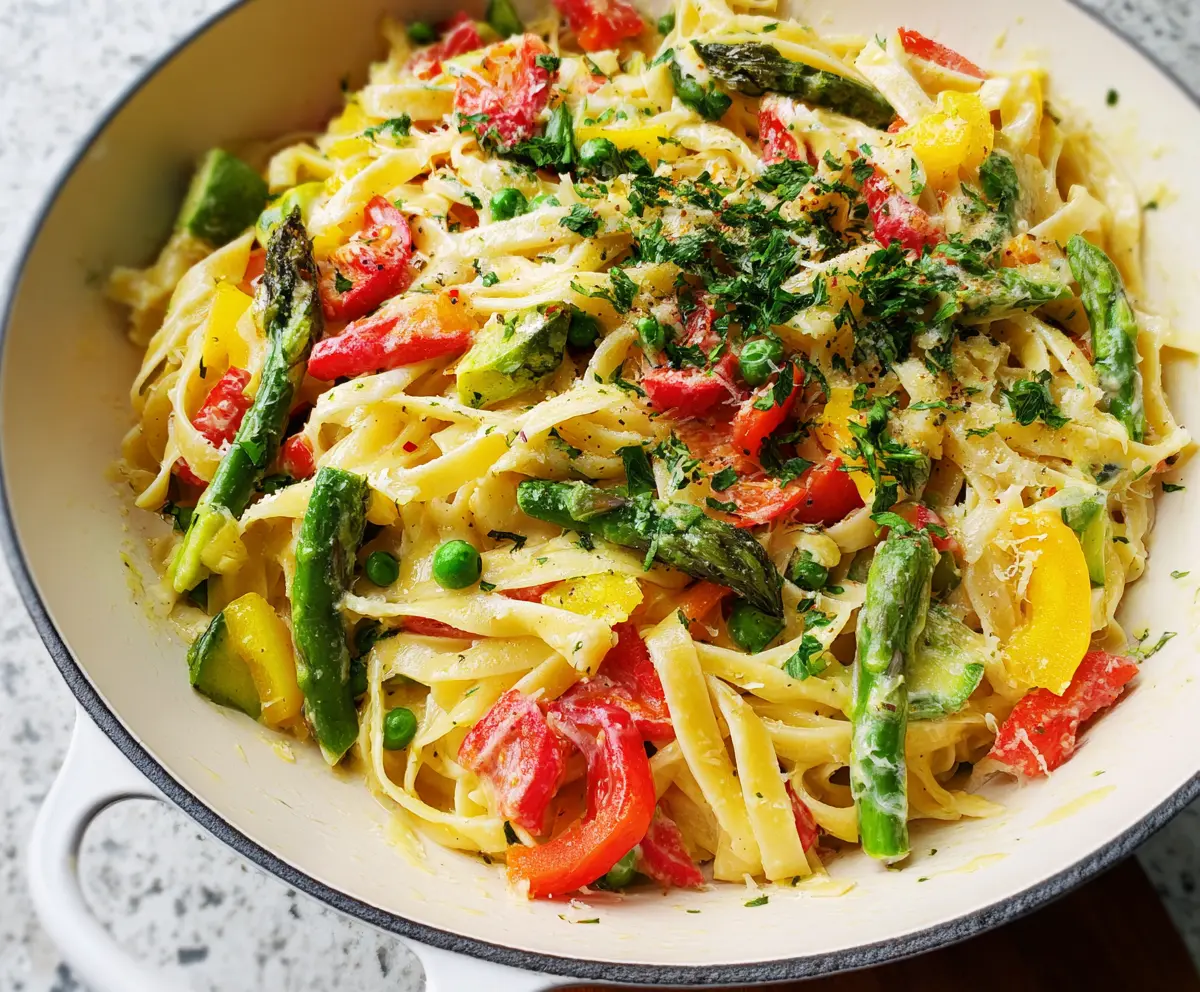
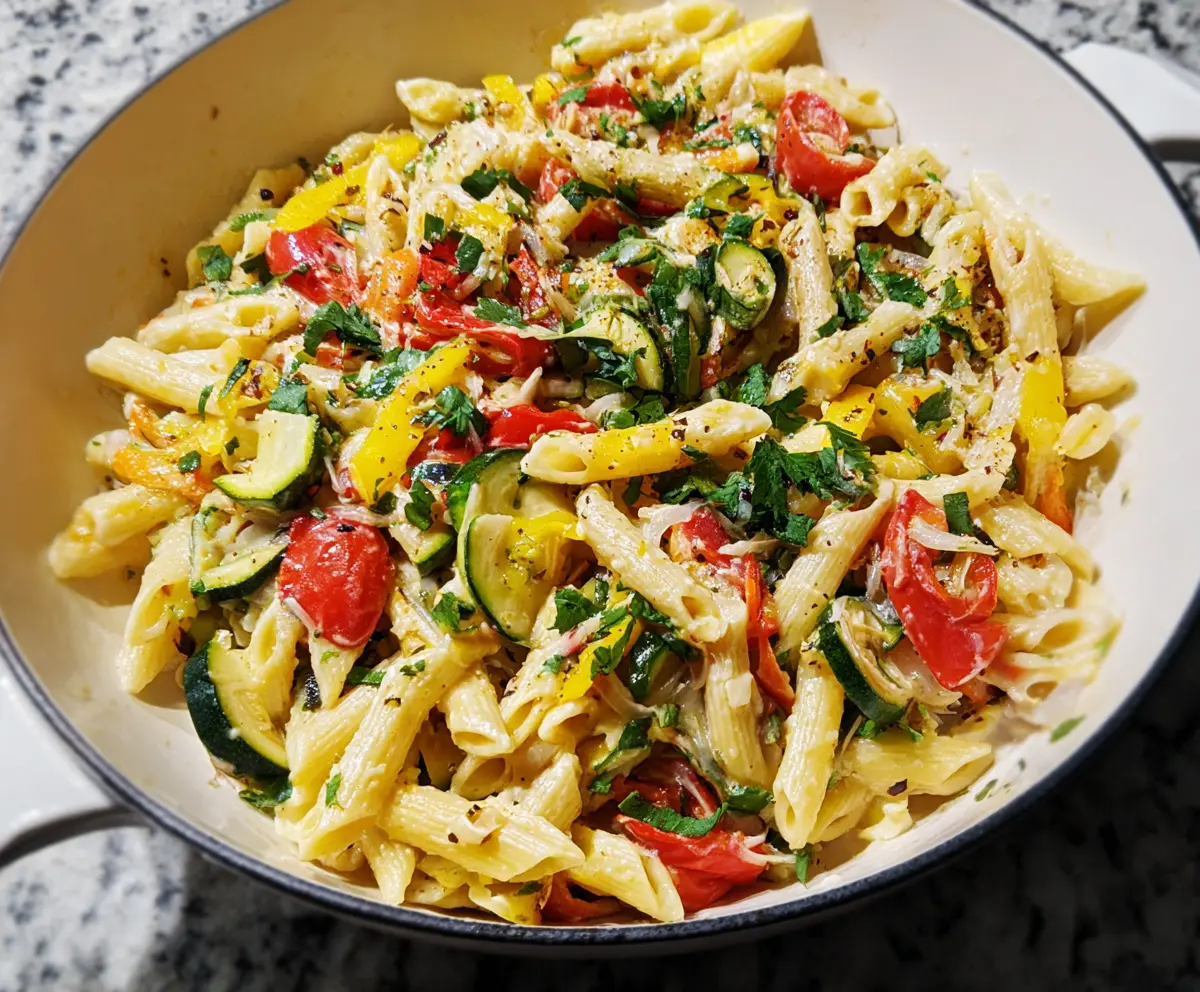
Pasta Primavera is a bright and cheerful dish that celebrates the fresh flavors of spring and summer. It’s all about tender pasta tossed with crisp, colorful vegetables like bell peppers, zucchini, cherry tomatoes, and peas, usually finished with a sprinkle of Parmesan and a splash of olive oil or a light sauce. The mix of textures and vibrant colors makes it a joy to eat and easy on the eyes.
I love making Pasta Primavera when I want something light but still satisfying. It’s a great way to use up whatever veggies I have on hand, and it cooks up quickly, which is perfect for busy weeknights. I often add a little garlic and fresh herbs like basil or parsley because they bring an extra layer of freshness that makes the dish feel extra special.
One of my favorite things about Pasta Primavera is how versatile it is. You can enjoy it warm right out of the pan or even let it cool down for a tasty pasta salad the next day. It always feels like a simple, healthy celebration on a plate, and it never fails to bring smiles around the table.
Key Ingredients & Substitutions
Pasta: Fettuccine or linguine works great as they hold sauce well. You can use penne or farfalle if you prefer shapes that catch bits of veggies better.
Vegetables: Bell peppers, asparagus, zucchini, and peas add color and crunch. Feel free to swap in broccoli, snap peas, or cherry tomatoes based on what’s fresh.
Heavy Cream: This makes the sauce creamy. For a lighter option, try half-and-half or a mix of cream cheese and milk. Coconut cream works for a dairy-free twist.
Parmesan Cheese: Adds a salty, nutty flavor. Use Pecorino Romano or Asiago as alternatives. Nutritional yeast is a good vegan substitute.
How Do You Cook Vegetables So They Stay Crisp and Colorful?
To keep veggies tender-crisp and vibrant:
- Cut veggies evenly for uniform cooking.
- Sauté over medium heat, stirring often, to cook without softening them too much.
- Add quicker-cooking veggies (like peas) later to avoid overcooking.
- Stop cooking once they’re bright and just tender. This keeps texture fresh and flavors lively.
Equipment You’ll Need
- Large pot – I use this to cook the pasta until it’s just right and it’s easy to drain later.
- Large skillet or pan – perfect for sautéing the veggies and making the sauce all in one place.
- Measuring cups and spoons – to keep everything balanced, especially the cream and cheese.
- Colander – for draining the pasta without losing any noodles or bits of water.
- Wooden spoon or spatula – helps toss everything together nicely without scratching the pan.
Flavor Variations & Add-Ins
- Swap vegetables: Used grilled eggplant, roasted cherry tomatoes, or spinach if you want a different vibe or more greens.
- Add protein: Stir in cooked chicken, shrimp, or tofu to make it more filling.
- Use different cheese: Swap Parmesan for Asiago, Pecorino, or a sprinkle of feta for a different flavor.
- Spice it up: Mix in red pepper flakes or a splash of hot sauce if you like some heat.
How to Make Pasta Primavera
Ingredients You’ll Need:
- 12 oz (340 g) fettuccine or linguine pasta
- 1 tbsp olive oil
- 1 medium red bell pepper, sliced into strips
- 1 medium yellow bell pepper, sliced into strips
- 1 cup asparagus spears, cut into 2-inch pieces
- 1/2 cup fresh or frozen green peas
- 1 medium zucchini, sliced into half-moons
- 3 cloves garlic, minced
- 1/2 cup heavy cream
- 1/2 cup grated Parmesan cheese, plus extra for serving
- Salt and freshly ground black pepper, to taste
- 1/4 cup fresh parsley, chopped (for garnish)
- Optional: pinch of red pepper flakes for a little heat
Time Needed
This recipe takes about 25 minutes total — 10 minutes to prep and cook the pasta and vegetables, plus about 10-15 minutes to make the creamy sauce and toss everything together. It’s a quick and colorful dish perfect for any day!
Step-by-Step Instructions:
1. Cook the Pasta:
Fill a large pot with salted water and bring it to a boil. Add the pasta and cook according to package directions until al dente (tender but still firm). Before draining, scoop out about 1 cup of the pasta water and set it aside — we’ll use it to adjust the sauce later. Drain the pasta and set it aside.
2. Sauté the Vegetables:
While the pasta cooks, heat olive oil in a large skillet over medium heat. Add the minced garlic and cook for about 30 seconds, until fragrant but not browned. Then add the asparagus, red and yellow bell peppers, zucchini, and peas. Stir occasionally and cook for 5–6 minutes until the vegetables are tender but still crisp and colorful.
3. Make the Creamy Sauce and Combine:
Turn the heat down to low and pour the heavy cream into the pan with the veggies. Stir well to combine. Sprinkle in the grated Parmesan cheese and stir until melted and the sauce turns smooth and creamy. If the sauce feels too thick, add a little bit of the reserved pasta water until it reaches your desired consistency.
Add the drained pasta to the skillet and toss everything together to coat the noodles evenly with the sauce and vegetables. Cook for 1-2 more minutes to warm through.
4. Season and Serve:
Season with salt, freshly ground black pepper, and red pepper flakes if you’d like a little spicy kick. Remove from heat, sprinkle with chopped fresh parsley and some extra Parmesan cheese.
Serve right away and enjoy your fresh, colorful Pasta Primavera!
Can I Use Frozen Vegetables for Pasta Primavera?
Absolutely! Frozen peas and asparagus work well if fresh isn’t available. Just thaw them slightly or add them a bit earlier when sautéing to ensure they cook through without becoming mushy.
What Pasta Can I Substitute?
You can use any pasta you like — penne, farfalle, or even spaghetti. Just adjust the cooking time according to the package instructions to keep it al dente.
How Do I Store Leftovers?
Store leftover pasta primavera in an airtight container in the refrigerator for up to 3 days. Reheat gently on the stove or in the microwave, adding a splash of pasta water or cream if the sauce has thickened too much.
Can I Make This Dish Vegan?
Yes! Replace heavy cream with coconut cream or a plant-based cream and swap Parmesan for nutritional yeast or a vegan cheese alternative for a dairy-free and vegan-friendly version.